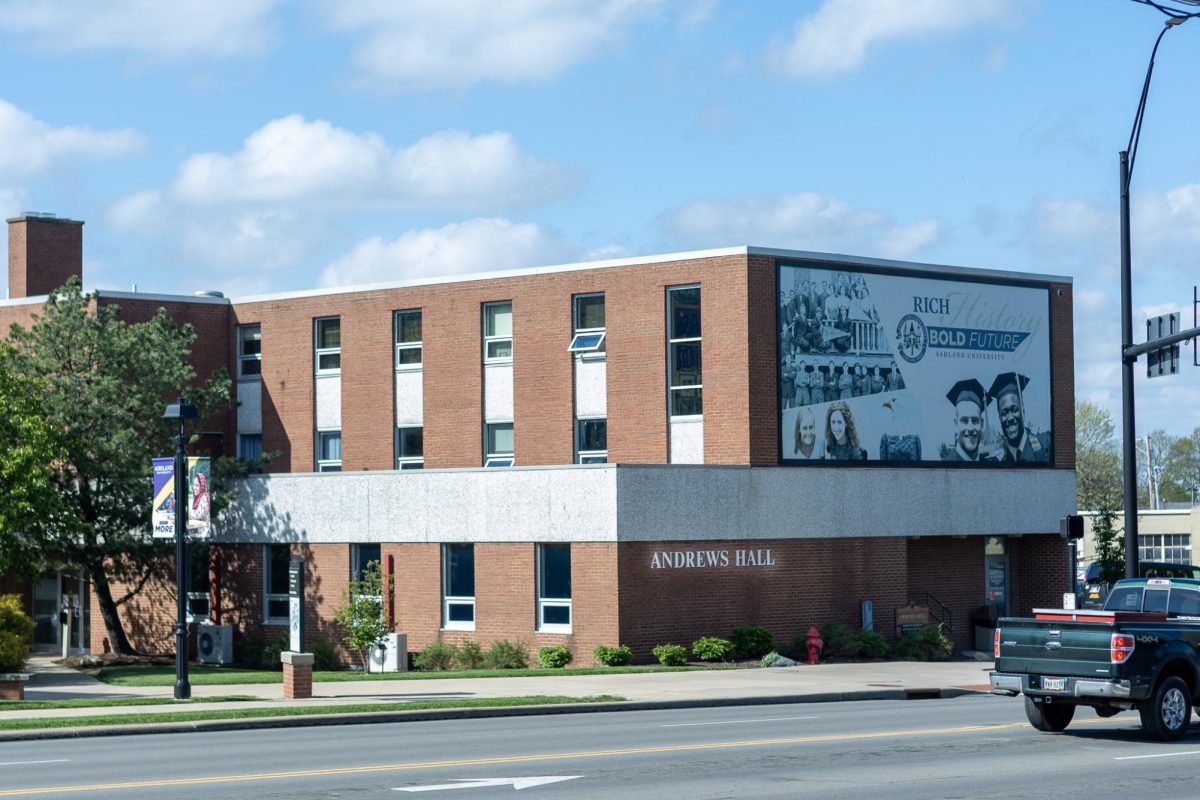
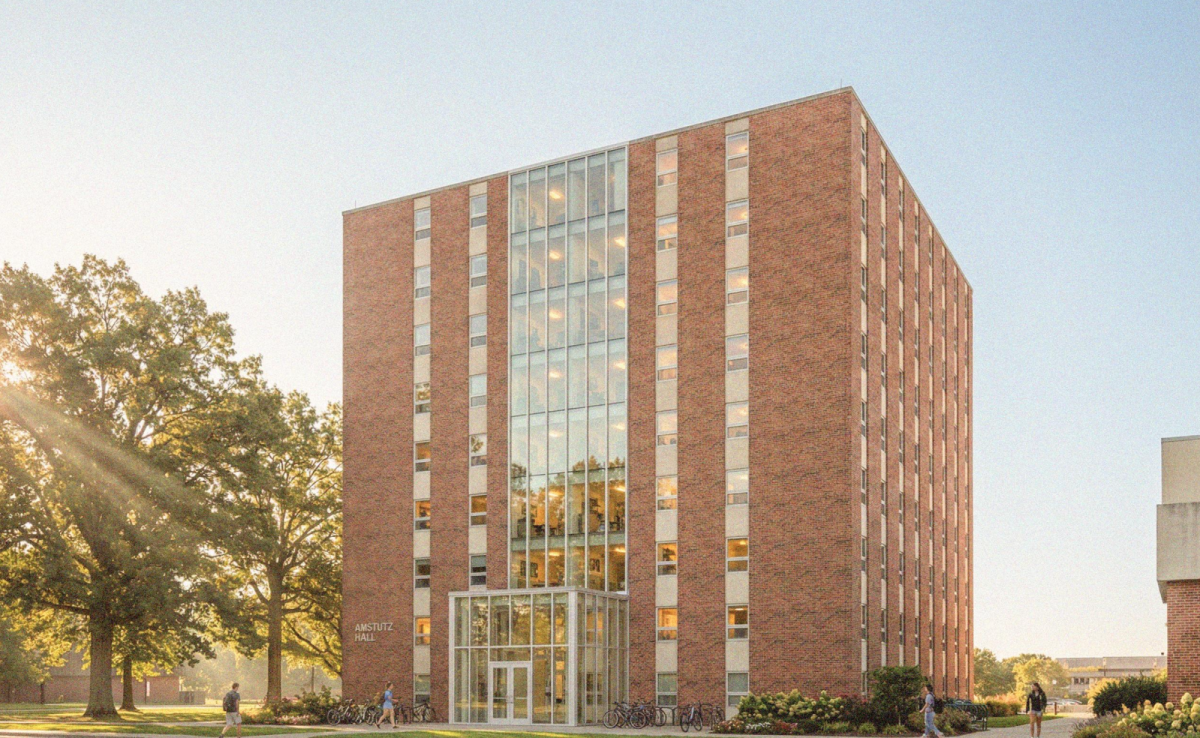
There are 44 buildings on Ashland University’s main campus. This includes academic facilities, recreational centers, residential halls and other structures across the 135 acres of land.
But how many of these buildings are fully accessible to all students?
Many academic facilities are up to date with accessible entrances, working elevators and smoothly paved walkways.
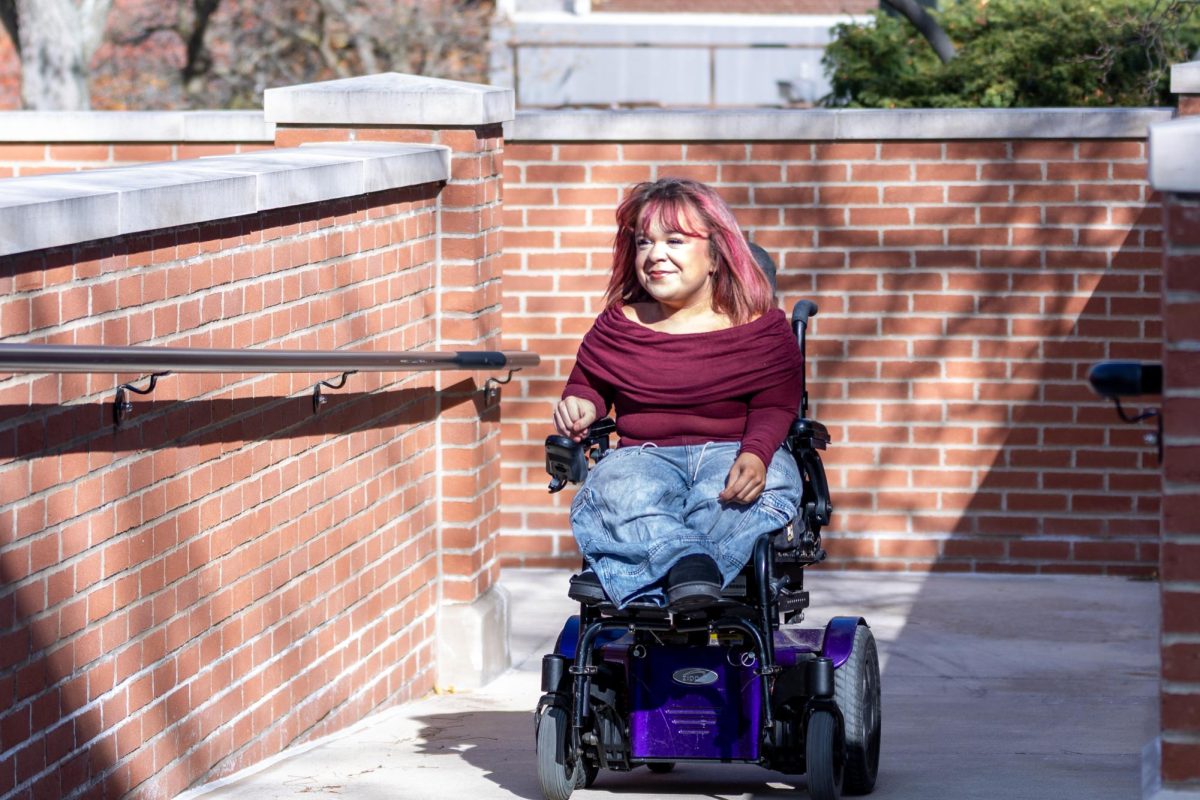
“Overall, this campus is beautifully accessible,” said freshman student, Brianna Studer.
Struder has been a wheelchair user her whole life and thrives in AU’s welcoming environment.
“I love AU so much; I love the community that it brings,” she explained.

Studer is involved in a variety of organizations across campus; she enjoys being on AU’s Campus Activities Board and in Alpha Psi Omega, the theatre honor society.
She is a marketing major and holds a minor in vocal performance; her schedule has her spending most of her time in the College of Business and Economics and the Center for the Arts.
“All of the professors are so attentive. They’re so helpful; they really do put their all into what they teach, and especially in the College of Business, where I am, their program is so beautiful and it’s so well thought out,” said Studer.
“Most of the buildings here are really accessible and really nice.”
For example, the Archer Library has four accessible entrances: two doors lead into the main lobby, both of which are equipped with automatic openers; one entrance sits on the front of the building; a ramp leads visitors right into the library café, Lyceum. Another door is stationed on the west side of the library on the ground floor, a convenient entrance into AU’s Religion Department.
When inside, two large elevators are available for all to use, leading up to the ninth floor and down to the basement.
“It doesn’t look like an afterthought, especially the ramp outside [The Archer Library;] it’s all well thought out,” said Studer.
However, this is not the case for all buildings on campus.
A student or staff member with a physical disability may have trouble getting around campus efficiently due to defective automatic door openers and rough, bumpy sidewalks.
“I’ve been late to classes a lot,” said sophomore, Dameyon Bloomfield. A member of the AU Football Team, Bloomfield tore his ACL and meniscus early in the season in a game against Indiana University of Pennsylvania.
“When I go from the library to the business building, it’s kind of a hard path to get by, especially in a wheelchair; I was probably struggling there for like 10 minutes trying to get to class,” said Bloomfield.

From the injury, the athlete has been switching between using crutches and a wheelchair to navigate campus.
A significant building on campus, Founder’s Hall, is generally accessible. There is an elevator located on the north side of the building; however, it is not the easiest to locate and not many students know it is there. This building houses multiple crucial offices for students such as financial aid, where information on scholarships, grants, loans and student employment is provided.
Another prominent staple of the university, The Center for the Arts building, is located on the east end of AU’s campus. Here, the Coburn Art Gallery, Journalism and Digital Media , Performing Arts, Fine Arts, Communication, Music Department and many more reside.
There are three levels to the building, two of which have outside access and ramps. Only the second-floor entrance has an automatic door opener. As of Nov. 6, the building does not have a functioning elevator. It is under construction and is set to be installed before the start of the spring semester.
“Bob and Jan Archer contributed to both the current CFA elevator replacement as well as the Kem Hall elevator replacements that will take place this summer,” said Rick Ewing, vice president of Operations and Planning. The Archers’ $600,000 contribution is being combined with university capital budget funds to cover the total $1.2 million cost.
The old freight elevator was not meant to be used by students, which explains the lack of signs leading to it.
Students who cannot use the stairs comfortably are unable to reach the third floor to attend any classes, clubs or activities that take place there. If one of the students is injured, the professor should relocate the class to an accessible room.
“We have identified some classrooms that faculty can move their class to, but that can be really problematic as well,” said Dan McDonald, interim dean of the College of Arts and Sciences, “especially a classroom that needs particular equipment, like a really good projector, a large screen, the ability to darken the room.”
The elevator replacement creates extra noise and distracts student learning. With many sports being in the active season, there are more injured athletes on campus than usual.
“No one sees putting this elevator in right now as well-timed, but it is the only time that we could get the company that’s installing the elevator to do it,” McDonald said.
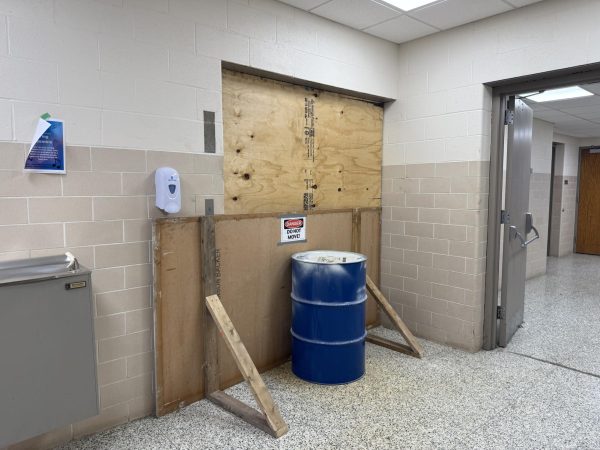
“In CFA, they don’t have an accessible bathroom on the first floor,” said Studer. She explained that she typically decides to go back to her dorm in this case, or she goes outside the building, around and down to the ground floor, and finally back up to her original classroom.
In high school, Studer was an advocate for students with disabilities.
“I was really outspoken in high school, but I didn’t love it; high school was not really my scene. I was so miserable, but through that, I got to advocate not only for myself, but for the people who came after me.”
She is still extremely passionate about advocating for those with disabilities; however, her college experience has looked quite different from her high school days.
“I don’t feel like I have to do that here, it was already like this; it was well thought through,” said Studer.
“It’s not only the buildings, but the activities that we do; through CAB, I’ve gotten to do so many things I never would have had the opportunity to do. They bring more experiences to us rather than making us go out and find them, which is so amazing.”
While the majority of AU students do not experience problems with accessibility on campus, there are many who do. Accessibility directly affects their college experience and daily routines.
AU’s motto, “Accent on the Individual,” is a well-rehearsed phrase in classrooms; how well it extends beyond academic spaces remains a point of attention.